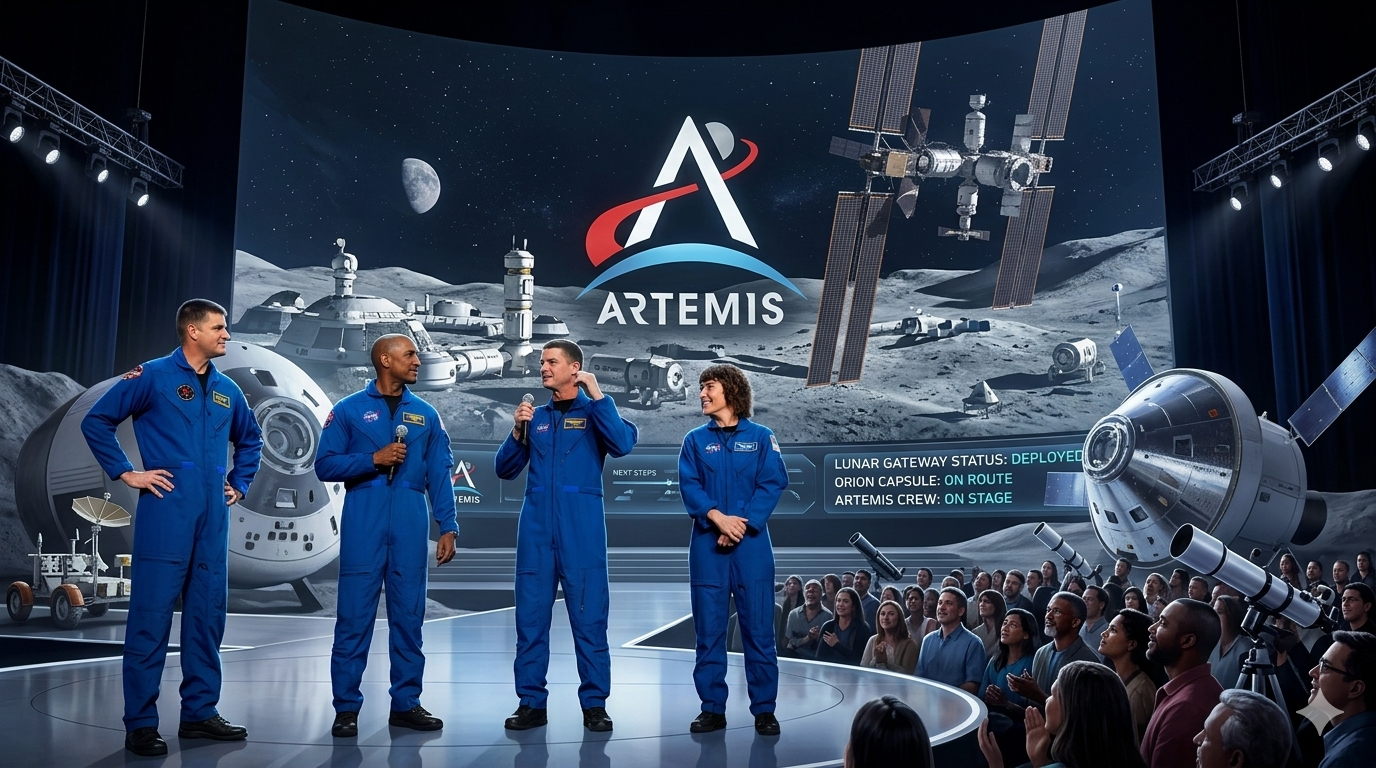
The wait of over 50 years is finally over. After a historic launch from Kennedy Space Center on April 1, 2026, the Artemis II Moon Mission is officially underway. Four brave astronauts are currently hurtling through deep space, marking the first time humans have ventured toward the Moon since the Apollo era.
But as the world watches the stars, the biggest question remains: Where is the Orion spacecraft right now?
Artemis II Moon Mission Status: Current Location of the Crew
As of April 4, 2026, the Orion spacecraft has successfully exited Earth’s orbit. Astronauts Reid Wiseman, Victor Glover, Christina Koch, and Jeremy Hansen are currently in the “Trans-Lunar Coast” phase.
According to NASA, the spacecraft is nearing the midway point between Earth and the Moon. The crew is busy testing the Orion’s complex life-support systems, ensuring everything is pitch-perfect for the high-stakes lunar flyby. Consequently, the mission is proceeding exactly as planned, with all systems reporting green.
Mission Timeline: Key Milestones to Watch
To understand the trajectory of the Artemis II Moon Mission, here is the critical timeline for the next few days:
| Date (2026) | Event Name | Current Status |
| April 1 | Launch from Kennedy Space Center | Successful |
| April 2 | Translunar Injection (The Moonward Push) | Completed |
| April 4 | Deep Space Navigation & System Checks | In Progress |
| April 6 | Lunar Flyby (Closest Approach to Moon) | Upcoming |
| April 10 | Splashdown in the Pacific Ocean | Scheduled |
Artemis II Moon Mission: Meet the Historic Crew
What makes this mission truly stand out is the diversity of the crew. For the first time in history, a woman (Christina Koch) and a person of color (Victor Glover) are part of a lunar mission. Joining them is Canada’s Jeremy Hansen, the first non-US citizen to travel this far into the cosmos.
These four pioneers aren’t just orbiting the Moon; they are paving the way for Artemis III, which aims to land the first humans on the lunar surface in decades. According to the official NASA mission briefing, this journey is the ultimate “stress test” for our future mission to Mars.
Why is Artemis II Moon Mission Trending Today?
The reason behind the massive surge in search interest (Breakout status) is simple: History and Risk.
1. The 50-Year Gap: This is the first crewed mission to the lunar vicinity since Apollo 17 in 1972. For a whole generation, this is their first “Moon Moment.”
2. Diversity in Space: For the first time, a woman (Christina Koch) and a person of color (Victor Glover) are heading to the Moon, sparking massive conversations about inclusivity in STEM.
3. The Mars Connection: This mission isn’t just about the Moon; it’s the mandatory “stress test” for NASA’s future goal of sending humans to Mars.
Expert Opinion: “A Risky but Necessary Leap”
Space industry experts are weighing in on the technical challenges of this 10-day journey. According to Dr. Elena Rossi, a leading aerospace consultant, “The Artemis II Moon Mission is far more complex than Apollo. We aren’t just going back; we are testing a completely new digital infrastructure. The Orion’s life-support systems are being pushed to their absolute limits to ensure that Artemis III can safely land humans on the surface.”
The general consensus among engineers is that the next 48 hours are the most critical, as the spacecraft enters the Lunar Sphere of Influence.
Public Reactions: “The World is Watching”
Social media platforms like X (formerly Twitter) and Reddit are flooded with real-time reactions. The #ArtemisII hashtag has garnered millions of impressions in just 24 hours.
- @SpaceGeek2026: “Watching the live feed of the Earth getting smaller is surreal. My grandfather saw Apollo; I’m seeing Artemis. Chills!”
- Reddit User (r/Space): “The fact that Christina Koch is on this mission is a huge win for girls everywhere. The Moon doesn’t seem so out of reach anymore.”
- Viral TikTok: A video comparing the 1972 launch footage with the 2026 4K SLS launch has already crossed 10 million views, highlighting the massive leap in technology.
Frequently Asked Questions (FAQs)
1. Will Artemis II land on the Moon? No. The Artemis II Moon Mission is a flyby mission. The crew will orbit the Moon and return to Earth. The actual landing is reserved for Artemis III.
2. How fast is the Orion spacecraft traveling? Orion will reach speeds of approximately 25,000 mph (40,000 km/h) during its re-entry into Earth’s atmosphere.
3. How long is the total mission duration? The mission is scheduled to last approximately 10 days, beginning with the April 1 launch and ending with a splashdown on April 10, 2026.
4. Can we watch the mission live? Yes, NASA is providing a constant stream of “Downlink Events” where the crew answers questions and shares live views from the cabin.
5. Why is Artemis II so important? It is the final test flight before NASA sends humans back to the lunar surface. It proves that the Orion capsule is safe for human deep-space travel.
Read More
Is Pooh Shiesty in Custody? The Shocking Truth Behind the FBI Raid and Kidnapping Charges