


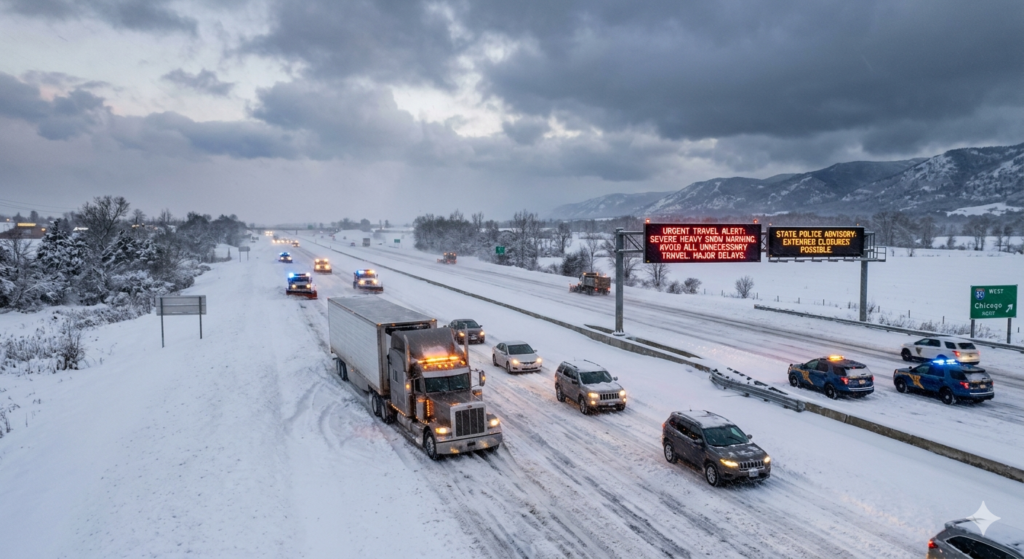
Severe Heavy Snow Warning: Blizzard Threat Prompts Urgent Travel Alerts Across U.S.
A powerful heavy snow warning has been issued for large swathes of the United States, as meteorologists predict as much as 30 inches of snow and blizzard conditions in the coming days. With “hazardous” travel expected and forecasters urging millions to stay indoors, social media is alight with urgent warnings, viral footage, and heated debate over the storm’s expected impact.
Heavy Snow Warning Issued: Key Developments and Areas Affected
On Thursday, the National Weather Service (NWS) issued a widespread heavy snow warning spanning multiple states, from the Midwest to the Northeast—mirroring recent events reported like “heavy snow warning as up to 18 inches to strike: ‘hazardous’ – Newsweek.” Some regions could see accumulations up to 30 inches, with local forecasters highlighting “blizzard conditions” and near zero visibility.
In higher elevations, such as parts of Colorado, Wyoming, and Montana, models suggest up to four feet of snow is possible—echoing similar warnings in recent winters. Residents in cities including Minneapolis, Chicago, and Buffalo are bracing for whiteout conditions, school closures, and potential power outages.
Heavy Snow Warning: What Travelers and Locals Need to Know
This latest snow system arrives on the heels of a wetter-than-average January, with wind gusts clocking up to 60 mph. NWS spokespersons warn: “Travel could become very difficult to impossible in affected areas.” Airports from Denver to Boston are already experiencing significant delays and cancellations.
- Airports urge travelers to check flight status before leaving home.
- Local authorities recommend keeping emergency kits, blankets, and food in vehicles.
- Regional power companies have mobilized extra crews in case of widespread outages.
- Schools in the Midwest and Northeast confirm plans for remote learning.
Online, viral weather maps project thick swaths of storm activity, echoing queries like, “‘heavy snow warning issued across multiple states – National Today.” Can up to 10 inches of snow really make travel impossible? The simple answer: Absolutely, under blizzard conditions.
Recent Heavy Snow Warnings: Not Just in the Lower 48
Interestingly, an unexpected heavy snow warning was issued for Hawaii this week, with Mauna Kea’s summit forecast for a rare 10-inch dump and 60 mph winds.
Background: From Minor Flurries to Record-Breaking Storms
Americans are no strangers to powerful winter storms, but this year has already seen several system ramp-ups. “Heavy snow warning as up to 30 inches to strike: ‘stay indoors’,” headlines scream. In spring 2023, a surprise March nor’easter brought nearly two feet to parts of the northeast, setting power outage records.
As climate change shapes atmospheric river dynamics, meteorologists now monitor “bomb cyclones” and “blizzard warnings” as frequently as summer hurricanes.
What People Are Saying Online: Social Media Reacts to the Heavy Snow Warning
The internet is buzzing. On Reddit, users from Vermont and Minnesota share photos of snowdrifts over six feet. A top post sarcastically notes, “Well, goodbye driveway. See you in April.”
Twitter brims with both frustration and humor. “Day #3: Still snowed in, invented ‘living room curling,’” joked @SnowboundGirl. Others inject urgency: “.@USNationalGuard on alert. If you can, stay off the roads. This #heavysnowwarning isn’t hype.”
In Glasgow, the trending hashtag #heavysnowwarningglasgow appeared after the UK Met Office echoed similar alerts, sparking comparisons between transatlantic responses.
Key Facts: Heavy Snow Warning Snapshot
- Up to 30 inches of snow forecast in some U.S. states
- Wind gusts may exceed 60 mph, causing whiteouts
- Airlines already reporting widespread cancellations
- Millions urged to avoid travel and stay indoors
- Emergency hotline and shelters activated across the region
Why This Heavy Snow Warning Matters Now
Beyond the hassle of rescheduling plans, the heavy snow warning serves as a critical reminder of the power—and unpredictability—of winter weather. Fast-accumulating snow, changing storm trajectories, and extreme winds can create hazardous situations. As communities still grapple with recent supply chain and power grid challenges, new snow emergencies test infrastructure resilience.
Personal stories only amplify the message: Elderly residents in New England organize neighborhood shoveling and checking on at-risk neighbors, while emergency crews remind the public that “one good decision—waiting out the storm—can save a life.”
Staying informed, preparing ahead, and heeding warnings isn’t just safer—it’s vital.
What Happens Next: Outlook For the Coming Days
Meteorologists predict the heaviest snow will fall in the next 48 hours, with travel disruptions likely to ripple through the weekend. According to latest forecast models:
- The Midwest and Northeast are at highest risk for power outages
- Secondary bands may bring freezing rain or sleet
- Emergency declarations remain possible in several counties
Local officials urge everyone to monitor live updates. Major news outlets like Newsweek and MSN Weather continue to track cancelations and community alerts.
For those seeking more on related breaking stories—like travel chaos at New York airports during adverse weather—read our in-depth coverage: Tragedy at LaGuardia: Air Canada Plane Crash Leaves New York Reeling.
FAQ
What is a heavy snow warning?
A heavy snow warning is an urgent announcement by weather authorities signaling dangerously high snowfall rates—often with severe wind—that may disrupt travel and daily life.
How much snow typically triggers a heavy snow warning?
Warnings are usually issued when 6 inches or more of snow is expected within 12 hours, but forecasts vary by region—and extreme cases may escalate to blizzard warnings.
Which states are affected by the current heavy snow warning?
The latest alert targets states from the Rocky Mountains through the Midwest and into the Northeast, including Colorado, Wyoming, Montana, Minnesota, Michigan, and upstate New York.
How should I prepare for a heavy snow warning?
Keep emergency kits at home and in your car, charge devices, avoid non-essential travel, and watch local news for updates. Stock up on food, water, and medicine before snow arrives.
Can a heavy snow warning cause flight cancellations?
Yes. Airlines often ground flights in affected regions, causing widespread travel delays and airport closures as seen in recent storms.
How is a heavy snow warning different from a blizzard warning?
A heavy snow warning signals significant snowfall is expected. A blizzard warning adds strong winds and reduced visibility, creating life-threatening travel conditions.