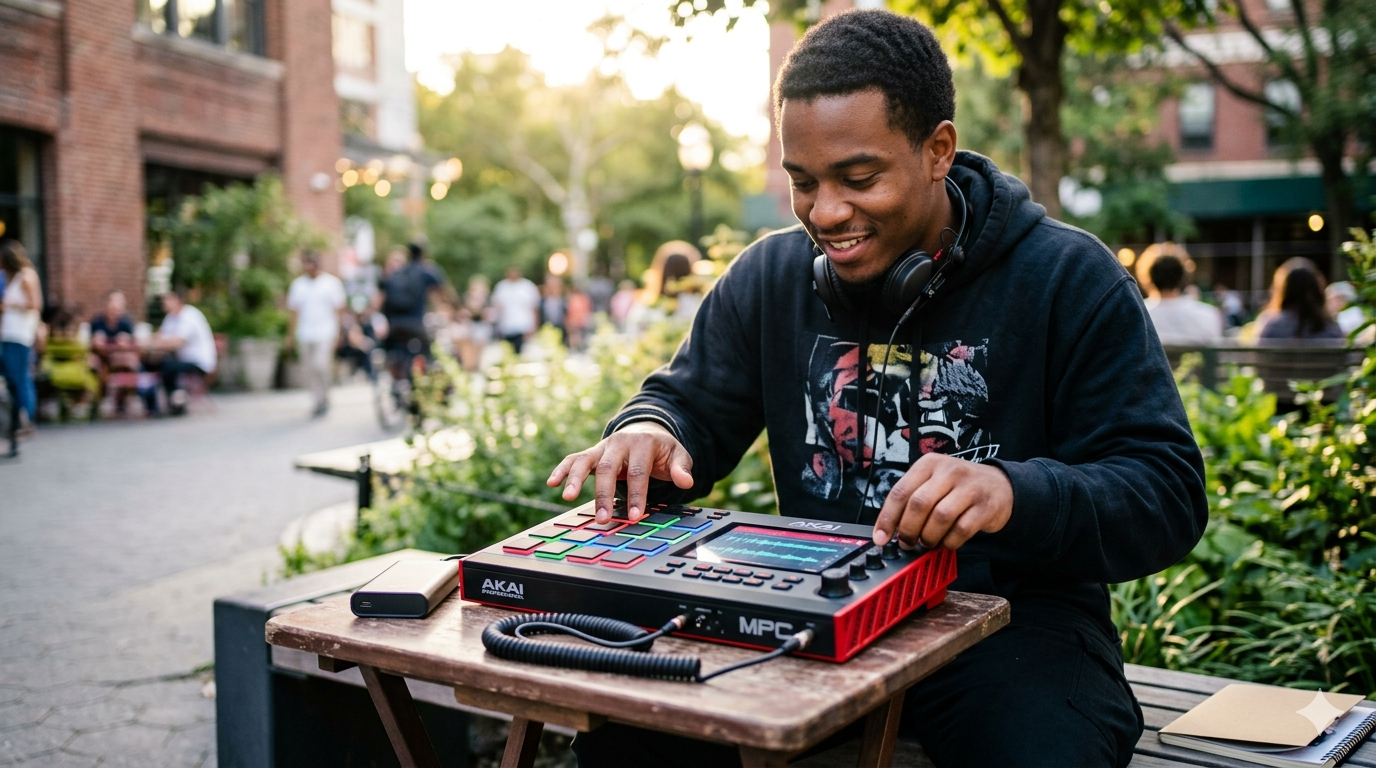
The music production world has been set ablaze with the official release of the mpc live 3, Akai Professional’s latest foray into the world of ultra-portable, standalone beatmaking. For decades, the MPC name has been synonymous with studio-grade sampling, but the introduction of this compact powerhouse signals a shift toward a more mobile, spontaneous creative workflow. Whether you are a seasoned veteran or a newcomer looking for your first piece of hardware, the mpc sample offers a unique blend of heritage and modern innovation that is difficult to ignore.
As the industry moves away from bulky setups, Akai is following teenage engineering and casio with a new portable sampler. – the verge, aiming to capture the hearts of “couch producers” and touring professionals alike. This device isn’t just a toy; it is a full-fledged production environment that fits in a backpack. Just as the sports world recently saw Travis Kelce’s stunning NFL return redefine expectations for longevity, Akai is looking to redefine the longevity of the sampler in the digital age.
Why the MPC Live 3 Standalone Hardware is Disrupting the Market
The primary appeal of the new device is its “go-anywhere” philosophy. Everything we know about the akai mpc sample so far: features, pricing and availability – musictech suggests that this device targets a $399 price point, making it one of the most accessible entries in the MPC lineup history. Akai professional’s mpc sample is a new way to make beats almost anywhere – forbes, and the hardware backs this up with a built-in rechargeable battery and an integrated microphone for on-the-fly recording.
Unlike previous iterations that required a constant tether to a power outlet or a computer, the mpc sample allows for a truly wireless experience. It features 16 velocity-sensitive RGB pads, a series of assignable knobs, and a dedicated screen for navigating the internal OS. The mpc sample is my new favorite portable beat maker – the verge reports, highlighting that the tactile response of the pads remains top-tier despite the smaller form factor. This release is a major milestone, similar to how Jaxon Smith-Njigba Shatters Records in the NFL; it sets a new benchmark for what $399 can buy in the music tech space.
Advanced MPC live 3 Edit Capabilities
One of the most critical aspects of any sampler is how it handles audio manipulation. The mpc sample edit workflow has been streamlined for the smaller screen without sacrificing the “meat” of the processing power. Users can perform non-destructive chops, time-stretching, and pitch-shifting directly on the device. This internal processing power ensures that you don’t need an external computer to finalize your loops.
The device also integrates seamlessly with modern file management. Producers can load sounds via SD card or USB, allowing for a massive library of mpc samples free or premium to be at their fingertips. The ability to zoom into waveforms and precisely set start and end points makes the mpc sample edit function feel professional rather than consumer-grade. It is this attention to detail that separates Akai from its more “lo-fi” competitors in the portable market.
Akai professional launches portable mpc sample standalone sampler
According to reports from Audio Media International, Akai professional launches portable mpc sample standalone sampler with a focus on “immediate creativity.” The device includes a built-in speaker, which, while small, provides enough clarity for basic monitoring while traveling. This launch is as significant to the beatmaking community as the Hannah Montana Special 20th Anniversary is to pop culture fans—a nostalgic return to form with a modern twist.
Technical Prowess: Understanding the MPC Live 3 Sample Rate
For the audiophiles and professional engineers, the mpc live 3 sample rate is a point of frequent discussion. The device operates at a standard 24-bit/44.1kHz, ensuring that the audio quality remains “studio-ready.” While some high-end interfaces offer 96kHz or higher, the 44.1kHz mpc live 3 sample rate is the industry standard for beat production, providing a perfect balance between high-fidelity sound and efficient file sizes for the internal storage.
Akai’s mpc sample is compact, $399 — let’s compare it to an original mpc60! – cdm create digital music. While the original MPC60 was famous for its 12-bit “crunch,” the modern mpc live 3 offers a much cleaner, transparent sound. However, Akai has included several vintage “plugin” emulations that allow users to mimic the grit and heat of those classic machines, giving producers the best of both worlds.
What People Are Saying Online: Reddit and Twitter Reactions
The social media reaction to the mpc sample has been polarized but generally enthusiastic. On Reddit’s r/MPC_users, many are praising the price point, calling it the “EP-133 killer.” Users are particularly excited about the standalone nature, with one user stating, “Finally, an MPC I can take to the park without needing a rolling suitcase.”
- Portability: Twitter users are sharing photos of the device fitting into small camera bags.
- Build Quality: Some concern has been raised on Reddit regarding the plastic chassis compared to the metal MPC Live II.
- Workflow: Sonicstate’s video comments show a divide between those who love the new simplified UI and those who miss the larger touchscreen.
While the tech world discusses these developments, the entertainment world deals with its own shifts, such as the news that Valerie Perrine Dies, reminding us of the transient nature of icons. In the same vein, Akai is ensuring the MPC legacy lives on by adapting to the needs of a new generation of creators who value mobility above all else.
Key Facts About the New MPC Live 3 Sample
- Price: Retails at approximately $399 USD.
- Storage: Supports SD cards up to 1TB.
- Connectivity: MIDI In/Out, USB-C, and 1/4 inch Audio I/O.
- Battery Life: Up to 6 hours of continuous standalone use.
- Software: Includes a license for the MPC Sampler Plugin for DAW integration.
Finding the Best MPC Live 3 Samples Free and Premium
A sampler is only as good as the sounds you put into it. Finding high-quality mpc samples free of charge is a priority for many new users. Akai provides a significant factory library, but the community has expanded this with “MPC samples – mpc horns” and “MPC samples & sounds. the best mpc expansion packs & tutorials.” Sites like Splice and Loopmasters offer dedicated MPC expansion formats that make loading new kits a breeze.
For those who prefer a hybrid approach, the mpc sampler plugin allows you to start a project on the hardware and move it to your computer for final mixing. This synergy between hardware and software is where Akai truly shines. Just as the Notre Dame Women’s Basketball team maintains a balance of veteran leadership and new talent, the MPC ecosystem balances classic hardware feel with modern software flexibility.
The MPC Live 3 Sampler Online Ecosystem
In today’s connected world, the mpc Live 3 sampler online integration is more important than ever. Akai has introduced cloud storage options that allow users to sync their samples across devices. While there isn’t a “browser-only” version of the MPC, the software’s ability to pull from online libraries directly into the mpc sample hardware via Wi-Fi is a massive productivity boost.
This connectivity ensures that you are never far from your library. Whether you are tracking the Rockets vs Bulls showdown on your phone or sitting in a studio in London, your samples are always accessible. This level of integration was once a dream but is now a standard feature of the Akai professional launches portable mpc sample standalone sampler – audio media international report.
Why This Matters
The release of the mpc sample represents the democratization of high-end music production. By lowering the price and increasing the portability, Akai is opening the door for creators who may have been intimidated by the complexity or cost of previous models. It’s a bold move that mirrors the high-stakes decisions seen in legal dramas, like the Bill Cosby $19 Million Verdict, where industry standards are challenged and rewritten.
Moreover, it forces other manufacturers to innovate. With competitors like the Teenage Engineering EP-133 and the Roland SP-404MKII already popular, Akai had to deliver something special. The mpc sample is their answer—a device that feels like a professional tool but plays like a portable instrument.
What Happens Next
As more producers get their hands on the unit, we expect a flood of new content, tutorials, and firmware updates. Akai has a history of supporting their standalone line with significant software additions, so the mpc sample you buy today will likely be even more powerful a year from now. Fans are already looking forward to the next big thing, much like the anticipation for the Dutton Ranch Spinoff premiere.
In conclusion, the mpc sample is a brilliant addition to the Akai family. It bridges the gap between the studio and the street, providing a professional mpc sample rate and powerful mpc sample edit tools in a package that fits in your hand. Whether you’re making beats on a plane or in a professional studio, this device proves that the future of sampling is standalone, portable, and more accessible than ever before.
FAQ
Is the MPC Sample truly standalone?
Yes, the mpc sample features a built-in battery and internal storage, allowing you to create entire tracks without a computer.
Can I use the MPC Sampler Plugin with this hardware?
Absolutely. The device comes with a license for the mpc sampler plugin, allowing for seamless integration with your favorite DAW.
Where can I find mpc samples free for my new device?
Akai offers a variety of free expansion packs on their website, and many community forums provide high-quality mpc samples free of charge.
What is the standard MPC sample rate?
The hardware typically records and plays back audio at 24-bit/44.1kHz, which is the industry standard for high-quality music production.
Does it support MPC sample edit functions like time-stretching?
Yes, the device includes advanced mpc sample edit features, including real-time time-stretching and pitch-shifting.
Can I access an MPC sampler online library?
While the hardware is standalone, it can connect to the internet via Wi-Fi to sync with Akai’s cloud services and online sample libraries.