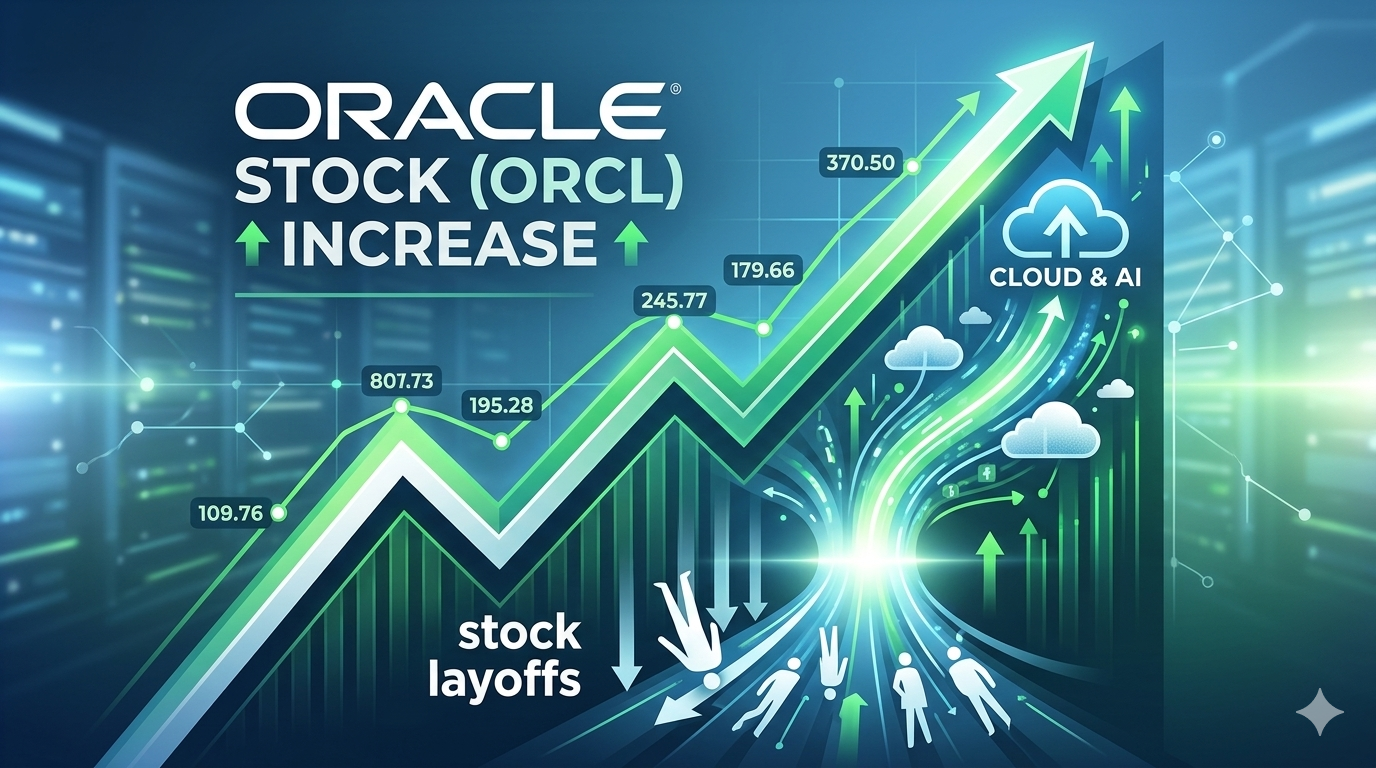
Investors in the tech sector are witnessing a dramatic shift in the market’s reaction to corporate restructuring. As of April 1, 2026, Oracle stock (NYSE: ORCL) has become the center of intense financial discussion following the announcement of widespread layoffs. While job cuts are typically met with somber headlines, Wall Street has responded with a surprising wave of optimism, sending shares up nearly 6% in recent trading sessions.
The primary driver behind this movement is a fundamental reallocation of capital. By trimming thousands of roles across global units—including Oracle Health, NetSuite, and Customer Success—the database giant is clearing a financial path to fund its massive AI data center buildout.
The Financial Impact: Why Oracle Stock Rose After Layoffs
To understand why the Oracle stock price climbed despite the negative optics of thousands of job losses, one must look at the underlying “free cash flow” narrative. Analysts estimate that if the current scale of layoffs reaches the projected 20,000 to 30,000 employees globally, Oracle could release between $8 billion and $10 billion in annual free cash flow.
Consequently, this capital is not just sitting in the bank. It is being funneled directly into Oracle Cloud Infrastructure (OCI). In a year where Oracle stock had previously struggled—down roughly 26% since January due to broader software sector corrections—this strategic pivot has provided a much-needed catalyst. Investors are increasingly viewing these layoffs not as a sign of distress, but as a “cost reset” designed to protect margins during a period of high capital expenditure (Capex).
AI Strategy and Cloud Growth: The Long-Term Outlook
Despite the recent volatility, Oracle’s long-term fundamentals remain a focal point for institutional investors. In the company’s Fiscal Q3 2026 report, Oracle revealed a staggering 325% year-over-year increase in Remaining Performance Obligations (RPOs), which now sit at $553 billion. This massive backlog of non-cancelable contracts suggests that demand for Oracle’s AI-ready cloud services is at an all-time high.
Furthermore, major banks like JPMorgan have recently upgraded their outlook. Following the earnings beat and the subsequent cost-cutting measures, JPMorgan set a price target of $210 for Oracle stock, citing an attractive entry point after the 2026 sell-off. The market is betting that Oracle can successfully transition from its legacy database roots into the foundational layer of the global AI ecosystem.
However, the road ahead is not without challenges. Near-term restructuring costs and the sheer scale of the 2026 layoffs have raised concerns about service delivery and employee morale. Nevertheless, for the US audience and global investors, the message from the boardroom is clear: efficiency is the new currency, and AI is the only destination.
FAQ on Oracle Stock
1. Why did Oracle stock go up after the 2026 layoffs?
Investors responded positively because the layoffs are seen as a strategic move to optimize cost structures. By reducing labor costs, Oracle can redirect billions of dollars into its high-growth AI and cloud infrastructure projects.
2. How many employees did Oracle lay off in 2026?
While Oracle has not confirmed an exact final number, initial reports suggest thousands of employees were affected across global business units, with some analysts predicting the total could eventually range between 20,000 and 30,000 roles.
3. What is the current analyst price target for Oracle stock?
As of late March 2026, consensus among major analysts remains a “Moderate Buy.” Specific targets include JPMorgan’s $210 and Barclays’ $240, suggesting significant upside from current levels.
4. Is Oracle’s cloud revenue still growing?
Yes. In the most recent fiscal quarter, Oracle reported cloud revenue growth of approximately 44% year-over-year, driven by intense demand for AI training capacity and multicloud database services.
5. How are the layoffs impacting Oracle’s AI strategy?
The layoffs are a core part of the strategy. They provide the necessary “financial oxygen” to fund the construction of massive new data centers required to host large language models and enterprise AI applications.
Disclaimer: This article is for informational purposes only and does not constitute financial advice. Always consult with a professional advisor before making investment decisions.
The Kristi Noem Affair Scandal: New Allegations Emerge as Husband Byron’s Secret Life is Exposed