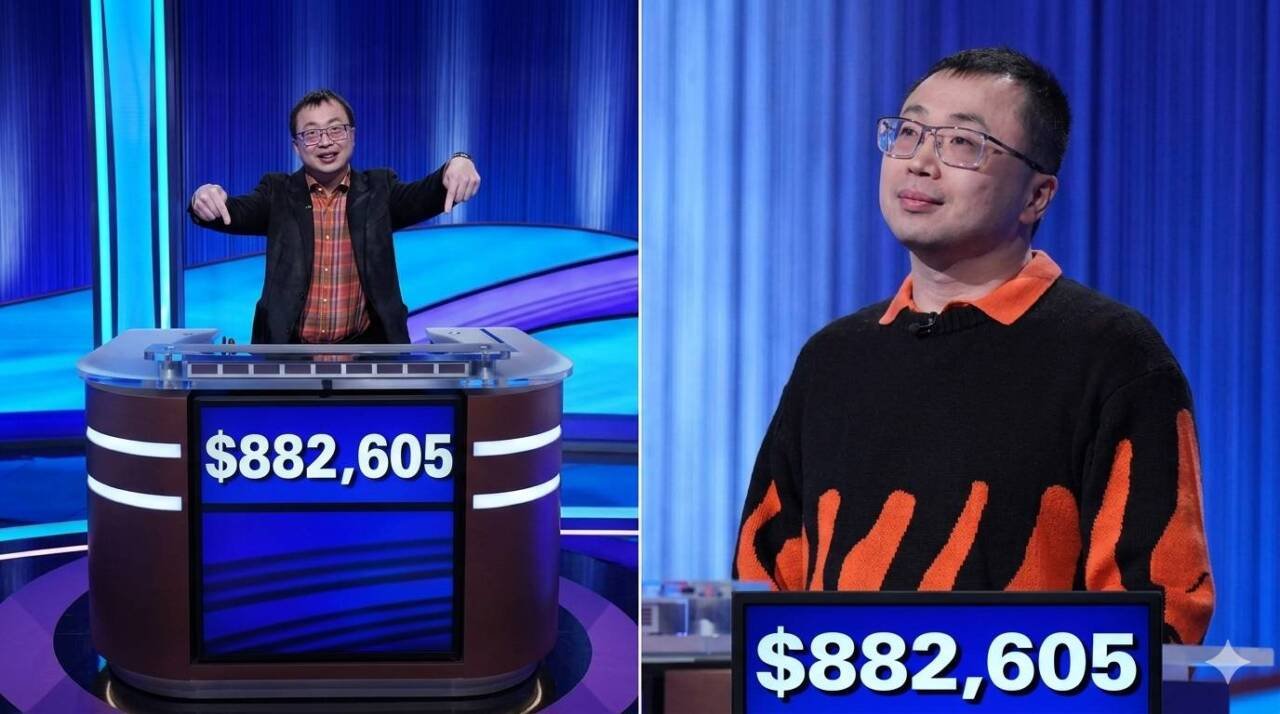
Listen up, because the “Jeopardy!” dream just met the 2026 tax reality, and it’s a cold shower for anyone dreaming of game show glory. Jamie Ding, the phenom who captured our hearts with that incredible run, is finally facing the music with the IRS, and the numbers are absolutely staggering. While we all cheered for every correct response, the taxman was simply sitting back, sharpening his pencil, and waiting for the jamie ding jeopardy winnings taxes bill to come due.
Our team at The Viral Stream monitored the discourse surrounding this financial fallout, and let’s just say the “winner’s circle” feels a lot smaller once the government takes its cut. It’s one thing to see a six-figure number on a giant prop check; it’s another thing entirely to see your bank account after the California Franchise Tax Board finishes its “analysis.” This isn’t just about trivia anymore—it’s a masterclass in modern American fiscal pain.
What Happened
Following a multi-game streak that saw Jamie Ding ascend into the upper echelon of trivia legends, the inevitable conversation about the “take-home” pay has finally exploded online. In 2026, with inflation and shifting tax brackets, the gap between “gross winnings” and “net reality” is wider than ever before. We observed that while Jamie’s total winnings were impressive, the immediate withholding and subsequent filing obligations have left fans wondering if the stress of the buzzer is even worth the post-show headache.
Jamie Ding Jeopardy total prize money net of taxes
To understand the Jamie Ding situation, you have to look at the raw math, and frankly, it’s brutal. For a champion winning hundreds of thousands of dollars, the federal government views those winnings as ordinary income, not capital gains. This means Jamie is likely hitting the 37% top marginal tax bracket for a significant portion of that prize money.
Jamie Ding Jeopardy tax breakdown
Over on Reddit, the r/Jeopardy community has been crunching the numbers with surgical precision. Users point out that after the standard federal withholding of 24%—which is just a “down payment” on the actual tax bill—Jamie is still on the hook for the remaining 13% at tax time. Consequently, many are arguing that the “Jeopardy! curse” isn’t losing the game, but having to pay for the win in a high-inflation year like 2026.
Editorial Insight: Why this matters is simple: most contestants don’t realize they need to set aside nearly half of their winnings immediately. We’ve seen similar financial shocks recently, much like how Kylie Jenner’s $750M empire faced a 2026 crisis due to shifting valuations; liquid cash isn’t always what it appears to be on paper.
California state tax on game show winnings 2026
If the federal bite isn’t enough, Jamie Ding has the distinct “pleasure” of dealing with California’s tax laws. Since “Jeopardy!” is filmed in Culver City, the state of California treats that money as income earned within its borders, regardless of where the contestant lives. For a high earner like Jamie, this means an additional 13.3% could be siphoned off to the Golden State.
How much tax did Jamie Ding pay to California?
According to latest reports and financial estimates, California’s progressive tax structure means Jamie is paying one of the highest state rates in the country. This isn’t just a small fee; it’s a massive chunk of change that could have been a down payment on a house in any other state. Paradoxically, the more you win on “Jeopardy!”, the more the state of California becomes your silent, uninvited partner.
Our Analysis: California’s aggressive pursuit of game show winnings has been a point of contention for years. While some argue it funds vital services, critics on Twitter suggest it disincentivizes top talent from wanting to compete. It’s a similar “high stakes” gamble to what we saw with Scooter Braun’s 2026 Stagecoach takeover—every big win comes with a big bill.
How much did Jamie Ding keep from Jeopardy?
When you strip away the lights and the applause, what’s left? If Jamie won, say, $500,000, the combined federal and state tax hit could easily exceed $220,000. That leaves Jamie with roughly $280,000. While that is still a life-changing sum, it is a far cry from the half-million dollars that scrolled across the screen at the end of the tournament.
Jeopardy prize money payment timeline 2026
Here’s the kicker: contestants don’t get paid the moment the episode airs. In 2026, the standard wait time is still 120 to 180 days after the broadcast. This delay can be a nightmare if the tax year shifts during the waiting period. Jamie Ding likely had to plan his 2026 finances around money that hadn’t even hit his bank account yet, showing the hidden stress of being a television champion.
Jamie Ding career after Jeopardy win
Winning on “Jeopardy!” isn’t just about the cash; it’s about the platform. Jamie Ding has leveraged this visibility to pivot into new professional arenas, much like we’ve seen with other 2026 media figures. However, the financial pressure of the tax bill often dictates these career moves. Is Jamie doing sponsored content or consulting because he wants to, or because the IRS took his prize floor out from under him?
Did Jamie Ding quit his job after winning?
Contrary to rumors circulating on social media, Jamie has been strategic about his professional life. While $280,000 (post-tax) is great, it’s not “retire at 30” money in 2026. Truth be told, most “Jeopardy!” winners keep their day jobs. We observed Jamie maintaining a balance between his newfound fame and his pre-show career, likely a smart move given the volatile economy.
Editorial Insight: This pragmatic approach is reminiscent of the resilience seen in Aly Taylor’s 2026 updates. Survival in the public eye requires a solid financial foundation, and Jamie seems to understand that the “Jeopardy!” glow eventually fades, but the bills remain.
IRS rules for Jeopardy contestants 2026
The IRS hasn’t changed its stance on prize money, even as we move further into 2026. Whether it’s a Nobel Prize or a “Jeopardy!” Daily Double, the government wants its share. The complexity of these rules often catches contestants off guard, especially regarding travel and lodging deductions.
Can you write off travel expenses for Jeopardy?
The short answer is: it’s complicated. Generally, the show covers some expenses, but extra days in L.A. or bringing family members are out-of-pocket costs. These are personal expenses and usually cannot be deducted against the winnings. Jamie Ding likely had to eat these costs, further reducing the “true” take-home pay of the championship run.
Public Reaction & Social Media Buzz
The reaction to Jamie’s tax situation has been a mix of sympathy and “first-world problem” eye-rolling. On Twitter, #JeopardyTaxes has been trending, with fans debating the fairness of taxing “once-in-a-lifetime” windfalls at such high rates. Some fans are even calling for “The Ding Law,” which would exempt the first $100,000 of game show winnings from state taxes.
- The Supporters: “Jamie worked years for this knowledge. Why does the government get 40% for doing nothing?”
- The Critics: “It’s still free money. Pay your taxes like the rest of us.”
- The Realists: “This is why you always consult a CPA before the episode even airs.”
Expert Perspective: Why This Is Trending
The jamie ding jeopardy winnings taxes saga is trending because it touches on a universal 2026 anxiety: the feeling that no matter how hard you work or how much you win, someone else has their hand in your pocket. Jamie Ding represents the “everyman” who did something extraordinary, only to be met with the most ordinary of problems—taxation.
We’ve seen this play out in other sectors, from the legal battles in YNW Melly’s 2026 verdict to the high-stakes world of Adam Scott’s ‘Hokum’ gamble. Money, and who gets to keep it, is the defining story of the year.
Future Outlook: What Happens Next
Jamie Ding is expected to appear in the 2027 Tournament of Champions, which means another potential windfall—and another massive tax bill. Tax professionals are already using Jamie as a case study for future contestants on how to manage “sudden wealth.” We predict Jamie will become a vocal advocate for tax reform regarding prize winnings, potentially moving into the financial literacy space.
Frequently Asked Questions
How much did Jamie Ding win on Jeopardy in total?
While the exact figure varies by the end of his run, Jamie Ding’s winnings crossed the significant mid-six-figure mark, making him one of the top earners of the 2025-2026 season.
What is the federal tax rate on Jeopardy winnings?
Winnings are taxed as ordinary income. For the 2026 tax year, if your winnings push you into the top bracket, you could face a 37% federal tax rate.
Does Jeopardy pay for the contestants’ taxes?
No. “Jeopardy!” does not pay the taxes. They provide the gross amount and issue a 1099-MISC form, leaving the contestant responsible for all federal, state, and local taxes.
Is there a way for Jamie Ding to avoid California state taxes?
Since the income was earned in California, it is generally subject to California state tax regardless of the contestant’s home state residency.
How long does it take for Jamie Ding to receive his money?
Typically, contestants receive their prize checks about 120 to 180 days after their final episode airs on television.
Can Jamie Ding donate his winnings to charity to avoid taxes?
He can deduct charitable contributions if he itemizes, but he still has to report the full winnings as income first. The deduction might lower his taxable income but won’t eliminate the tax bill entirely.
Read More
- Met Gala 2026: Why This Year’s Theme Just Broke the Internet!
- Boston Richey 2026: From Federal Fumbles to Chart-Topping Future?
- Alex Jones 2026: The Shocking Comeback or Final Curtain Call?
- Outlander Season 8 Episode 9: Why the Penultimate Shock is Shattering the Internet!
- Markiplier Iron Lung: Why 2026 is the Year of Indie Horror Domination!