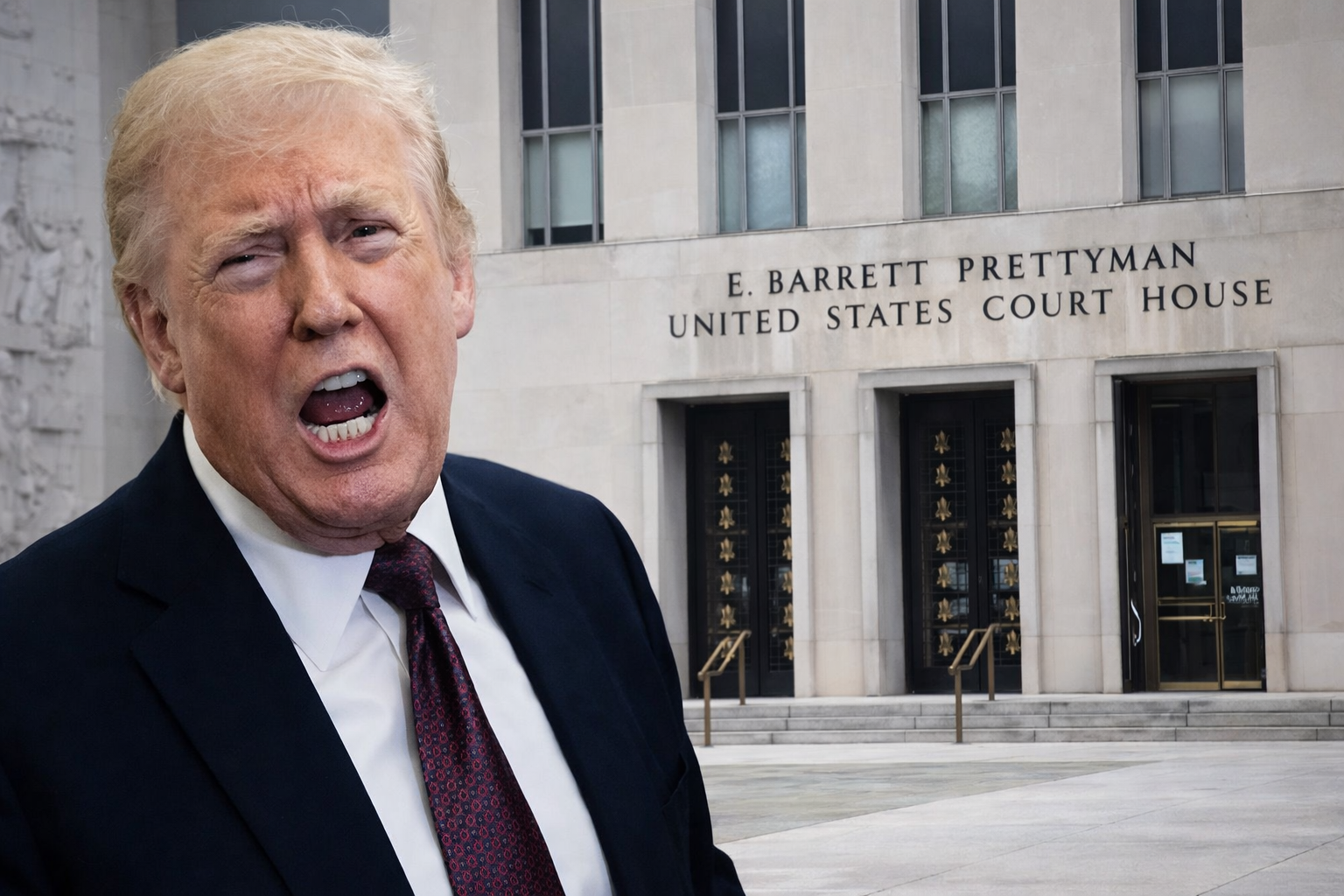
A major judicial hurdle has been cleared by the 47th President in a decision that is reverberating through the halls of Washington D.C. today. On April 15, 2026, a federal appeals court delivered a decisive blow to a long-running inquiry into the administration’s controversial border policies. The ruling effectively halts a high-stakes investigation that had threatened to derail the executive branch’s current immigration agenda. For those following the legal battles of the White House, this victory is being seen as a massive validation of executive authority regarding national security and border enforcement.
The Turning Point in Trump Administration Contempt Proceedings
The legal firestorm surrounding the Trump Administration Contempt Proceedings reached a fever pitch earlier this year. The case originated from allegations that the executive branch had ignored specific judicial stays regarding the immediate deportation of non-citizens. It was argued by special prosecutors that the administration had willfully bypassed court orders to expedite “mass removal” flights.
However, the tide has turned. It was determined by the appellate panel that the executive branch acted within its constitutional “good faith” discretion during a period of declared national emergency. Transitioning from a defensive stance to a triumphant one, the administration’s legal team noted that the termination of these proceedings removes a “dark cloud” that had been hanging over the Department of Homeland Security’s operations since the inauguration.
Analyzing the Original Judge James Boasberg Ruling
To understand the weight of today’s victory, one must look back at the Judge James Boasberg Ruling from late 2025. Judge Boasberg, of the U.S. District Court for the District of Columbia, had originally expressed deep skepticism regarding the administration’s compliance. In a scathing 45-page opinion, it was suggested by Boasberg that the government’s actions bordered on “defiance of the judicial branch.”
He had authorized a deep-dive discovery process to determine if senior officials should face criminal charges for continuing deportation flights despite a temporary restraining order. While Boasberg’s intent was to uphold the “rule of law,” his decision was criticized by the White House as an “activist overreach” that hindered the President’s ability to protect the borders. Today’s reversal essentially renders Boasberg’s previous constraints null and void.
The Use of Alien Enemies Act Deportations
At the heart of the legal dispute is the controversial application of Alien Enemies Act Deportations. The 1798 law, which allows for the removal of individuals from countries with which the U.S. is at war or has a “threat of invasion,” was invoked by the President to bypass standard immigration court backlogs.
The administration’s “Operation Remigration” relied heavily on this wartime-era statute to justify the rapid movement of deportation flights. It was contended by civil rights groups that the act was being misused in a time of peace. Nevertheless, the appeals court hinted that the judiciary has limited power to second-guess the President’s definition of a “national security threat,” thereby providing a legal shield for the continued use of this historic and powerful tool.
Inside the D.C. Circuit Court Decision
The D.C. Circuit Court Decision was handed down by a three-judge panel in a 2-1 vote. In the majority opinion, it was stated that “the district court exceeded its authority by initiating a criminal inquiry into the core functions of the executive branch.” The ruling emphasizes that the separation of powers prevents a single judge from micromanaging the logistical timing of deportation flights during an active border crisis.
Furthermore, the decision clarifies that “contempt” cannot be found when there is any reasonable interpretation of a court order that allows for the government’s actions. This high bar for criminal contempt was not met in this instance, according to the panel. This authority keyword—the D.C. Circuit—is significant because it is often considered the second-highest court in the land, making this a nearly insurmountable win for the Trump legal team.
The End of the Criminal Contempt Investigation 2026
With the shuttering of the Criminal Contempt Investigation 2026, the Department of Justice has been ordered to cease all grand jury activity related to this specific probe. This investigation had originally sought to subpoena internal communications between the White House and the Border Patrol.
The closure of the file is being celebrated by supporters as a defeat for the “Deep State” and “lawfare.” Conversely, it is viewed by opponents as a dangerous precedent that could allow future administrations to ignore court orders without fear of personal criminal liability for officials. Regardless of the viewpoint, the immediate effect is clear: the deportation flights will continue without the looming threat of jail time for those executing the orders.
Public Opinion: Reddit and Twitter React
The internet has exploded with reactions following the news of the dismissal.
• On Twitter (X): The hashtag #TrumpLegalWin is trending, with supporters praising the court for “restoring the Constitution.” High-profile legal influencers are tweeting that this “crushes the narrative” of administration lawlessness.
• On Reddit: In r/Politics, the discussion is much more polarized. Thousands of comments in a megathread suggest that the ruling “guts the power of the courts.” Meanwhile, in r/Conservative, users are calling it a “massive win for border security.”
• Viral Sentiment: A viral clip of a prominent legal analyst explaining the 1798 Act has garnered over 2 million views, as the public tries to understand how a 200-year-old law just saved the current administration’s agenda.
FAQ: People Also Ask
What were the Trump Administration Contempt Proceedings about?
The proceedings were focused on whether the government intentionally ignored court orders to stop specific deportation flights in late 2025.
Who is Judge James Boasberg?
Judge James Boasberg is a U.S. District Judge in D.C. who originally allowed the investigation into the administration’s conduct to proceed.
Can the President use the Alien Enemies Act of 1798 today?
Yes, the recent court decision suggests that the President has broad authority to invoke this act during a declared national emergency to facilitate deportations.
What did the D.C. Circuit Court decide?
The court decided to shut down the criminal contempt probe, ruling that the lower court overstepped its bounds in investigating the executive branch’s enforcement of border policy.
Will the deportation flights stop now?
No, the flights are expected to continue, and the legal path for them has been cleared by this latest appellate victory.
Is there a way to appeal this decision?
Opponents could petition for an en banc hearing (the full court) or appeal to the U.S. Supreme Court, though legal experts say the current ruling is very strong.
Our Opinion: A Reaffirmation of Executive Power
In our view, this ruling represents a significant reaffirmation of the President’s power to conduct foreign and domestic policy without constant judicial second-guessing. While the “rule of law” must always be protected, the Trump Administration Contempt Proceedings were arguably becoming a tool for political obstruction rather than justice. We believe this decision provides the clarity needed for the government to function effectively during a crisis, though the long-term impact on judicial oversight will be a subject of debate for years to come.
For official court documents and further legal analysis, visit the D.C. Circuit Court of Appeals official site.