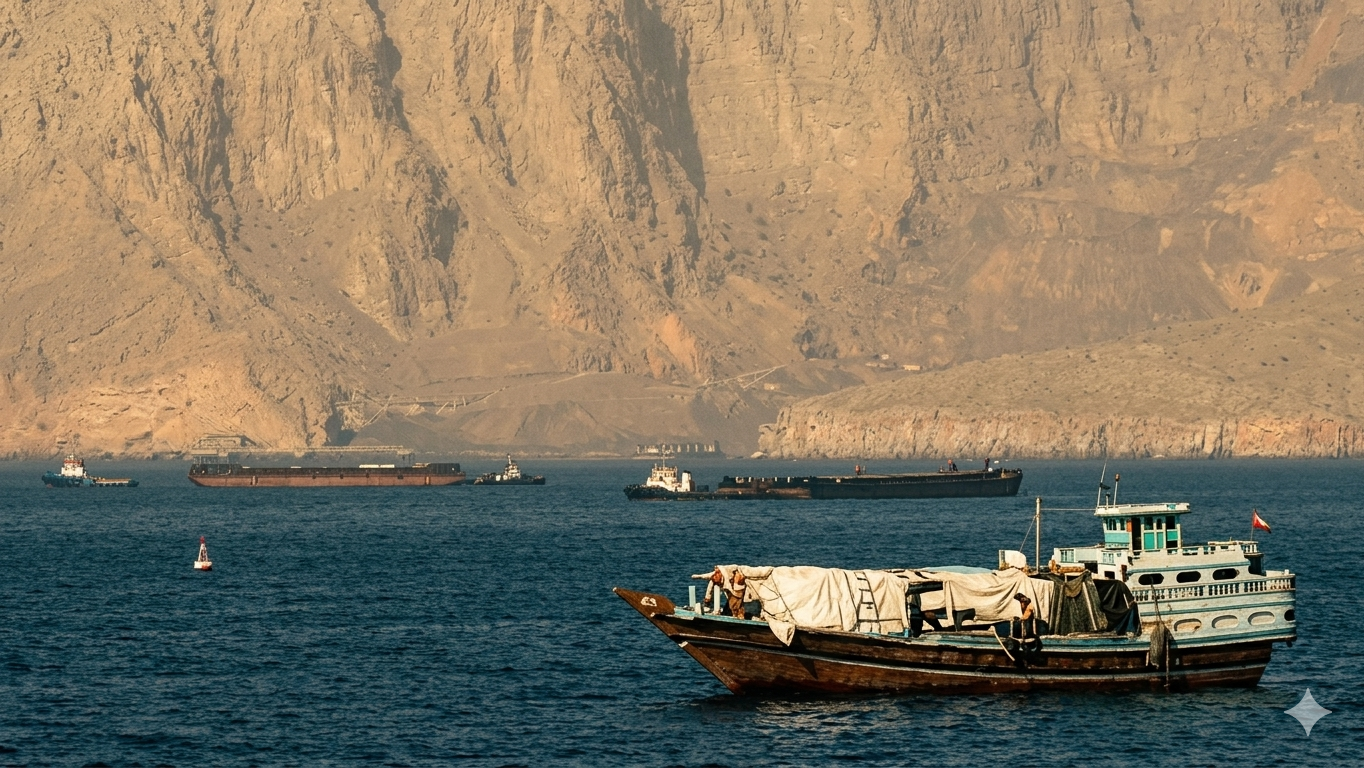
The global energy market was sent into a tailspin on April 18, 2026, as news broke that Iran has once again shut down one of the world’s most vital maritime arteries. This sudden move comes less than 24 hours after a brief reopening, leaving hundreds of massive tankers stranded and world leaders scrambling for a diplomatic solution. The Strait of Hormuz Closure 2026 is not just a regional dispute; it is a high-stakes standoff that threatens the very stability of the global economy.
The Re-escalation: Strait of Hormuz Closure 2026
The Strait of Hormuz Closure 2026 was officially reinstated by the Islamic Revolutionary Guard Corps (IRGC) on Saturday. While a 10-day ceasefire in Lebanon had initially prompted Iran to declare the waterway “open,” the decision was reversed almost immediately. Consequently, the IRGC navy issued a chilling warning that “no vessel should make any movement” through the passage, effectively locking down 20% of the world’s petroleum supply.
This move was triggered by President Trump’s declaration that the United States would maintain its naval blockade on Iranian ports despite the regional truce. As tensions flared, several merchant ships attempting to transit during the brief opening were reportedly fired upon. The volatility in the region is at an all-time high, mirroring the legal and corporate battles we see in other sectors, such as the [Trump administration contempt proceedings legal win 2026], which continues to shape the domestic policy landscape.
The Trigger: Iran US Maritime Conflict
At the heart of this crisis is the intensifying Iran US Maritime Conflict. The standoff began in earnest earlier this year following the assassination of Iran’s supreme leader, leading to a direct military confrontation. However, the current “tit-for-tat” revolves around the U.S. Navy’s efforts to blockade Iranian oil exports.
The United States maintains that the blockade is necessary to force Tehran into a new nuclear and security deal. Iran, meanwhile, views the blockade as an act of “maritime piracy.” This geopolitical chess match has turned the Persian Gulf into a frontline, where even tech giants are keeping a close eye on satellite security, similar to the strategic moves seen in the [Amazon Globalstar acquisition to rival Starlink].
Economic Fallout: Global Oil Supply Shock
The immediate result of the closure has been a Global Oil Supply Shock unlike anything seen since the 1970s. Brent crude oil prices, which had started to cool during the brief Friday opening, surged past $120 per barrel within hours of the re-closure. Because the Strait is a “choke point” for nearly 21 million barrels of oil per day, any disruption leads to instant price hikes at gas stations worldwide.
Market analysts warn that a prolonged closure could push prices toward $150. This energy crisis is forcing companies to innovate at a rapid pace to reduce petroleum dependency, much like the visionary shifts discussed regarding [Mark Zuckerberg’s latest innovations for Meta’s future]. For now, however, the world remains tethered to the oil that must pass through these narrow waters.
Rising Tensions: IRGC Ship Attacks
On Saturday morning, reports of IRGC Ship Attacks began to flood maritime security agencies. Islamic Revolutionary Guard Corps patrol boats reportedly fired warning shots—and in some cases, direct hits—at tankers that ignored the re-closure notice. An Indian-flagged vessel and a UK-managed tanker were among those caught in the crossfire.
These attacks are designed to demonstrate Iran’s “strict management and control” over the waterway. By targeting commercial vessels, Tehran is sending a clear message to Washington: if Iranian oil cannot flow, no one’s oil will. The use of drones and fast-attack craft has made the Strait a “no-go zone” for major shipping firms like Maersk and Hapag-Lloyd.
International Law: Freedom of Navigation Crisis
The legal implications of this standoff have sparked a Freedom of Navigation Crisis. Under the UN Convention on the Law of the Sea (UNCLOS), the Strait of Hormuz is recognized as an international waterway where “transit passage” should be guaranteed. However, Iran argues that the U.S. blockade has already nullified these international norms.
Western allies have condemned the closure as a violation of international law, while Iran insists it is exercising its sovereign right to defend its territorial waters from “hostile” blockades. This legal deadlock makes it difficult for insurance companies to cover any vessel daring to enter the Gulf, further choking the supply chain.
Public Opinion: Reddit & Twitter Reacts
On Twitter (X), the hashtag #OilPrice and #StraitOfHormuz are trending globally. Users are sharing satellite images of tanker traffic jams, with one viral tweet noting: “We are watching the 1970s energy crisis in 4K resolution. The world isn’t ready for $7 gas.”
On Reddit, the r/Geopolitics and r/WorldNews communities are debating the “Islamabad Talks” which were supposed to prevent this. One popular thread suggests that: “Trump is using the blockade as ultimate leverage, but Iran has the ‘kill switch’ for the global economy. It’s a game of chicken where everyone loses.”
Official News Coverage
Watch the latest military updates regarding the naval standoff here:
Iran Closes Strait of Hormuz: Military Update 2026
Frequently Asked Questions (FAQs)
1. Why did Iran close the Strait of Hormuz again on April 18?
Iran closed the Strait in retaliation for the U.S. refusing to lift its naval blockade on Iranian ports, despite a temporary regional ceasefire.
2. How much oil passes through the Strait of Hormuz?
Approximately 20% of the world’s total oil consumption and a large portion of liquefied natural gas (LNG) pass through this narrow waterway daily.
3. Is there an alternative route to the Strait of Hormuz?
While some pipelines exist through Saudi Arabia and the UAE, they can only handle a fraction of the total volume, making the Strait nearly irreplaceable.
4. What is the current price of oil due to the closure?
As of April 19, 2026, Brent crude is trading between $120 and $126 per barrel, with high volatility expected.
5. How long will the Strait of Hormuz Closure 2026 last?
The IRGC has stated the closure will remain “until the U.S. blockade is lifted.” Negotiations in Pakistan are ongoing to find a resolution before the April 22 deadline.
6. Is the US military involved in the Strait?
Yes, the U.S. Navy is currently conducting “Freedom of Navigation” operations and maintaining a blockade of Iranian-bound vessels.
Conclusion
The Strait of Hormuz Closure 2026 represents a critical juncture in modern history. As the Iran US Maritime Conflict escalates, the threat of a Global Oil Supply Shock looms larger than ever. Whether through diplomacy in Pakistan or a military de-escalation in the Gulf, the world is waiting with bated breath for the reopening of this essential passage.
Disclaimer: This article is based on evolving geopolitical events as of April 2026. Readers are encouraged to monitor live news feeds for the most current maritime security alerts.